One of my favourite things is going to a place where I have little to no expectations of what it will be like. I hadn’t heard of Piran before arriving in Slovenia, and even when we hired a car to drive out there, all I knew was that it was coastal and “kinda old”. It has now managed to weasel its way very high up on our list of favourite places, though that’s always a hard thing to say when you’re near the beginning of your travels. This came at the end of our first house-sit, as a short break to fill the gap between that and our next one.
The drive along the coastline to Portorož took us past charming towns that you can hop between easily, either by car or by bus. One thing to bear in mind with Piran is that you can’t bring cars into the city itself. There is parking on the outskirts of the city (e.g. Fornače), and from there you can catch a free shuttle or take the easy 10min stroll into the city. As we needed to drop our rental car off in Portorož, we caught the bus into Piran. Unfortunately though, we hadn’t counted on the fact that there would be NO luggage storage options in Portorož (especially considering how many hotels there are there!). We had hoped to leave it there while we spent the day in Piran and then pick it up just before catching our bus out. Turns out the only luggage storage in the area is the Information Centre in Piran, which meant dragging everything – and it’s not a small amount – down the road to the bus stop, hoisting it onto the bus and then lugging it another 10mins from the bus stop to the Information Centre on one of the hottest days I can remember. Perhaps we should have done more homework, but here I am, warning you….
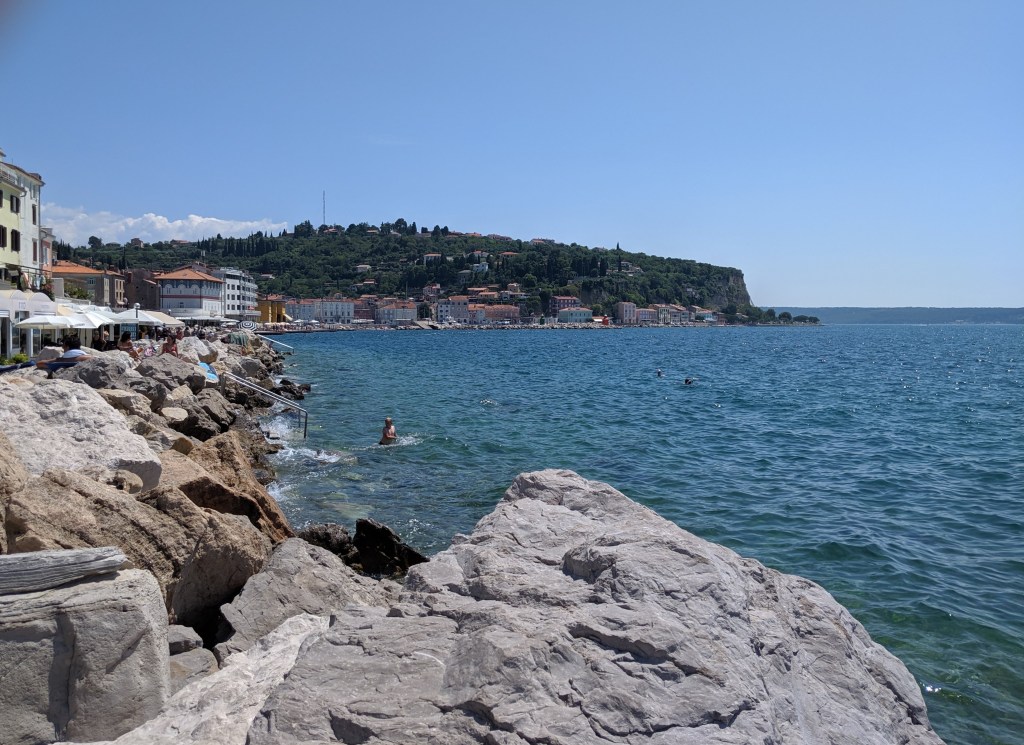
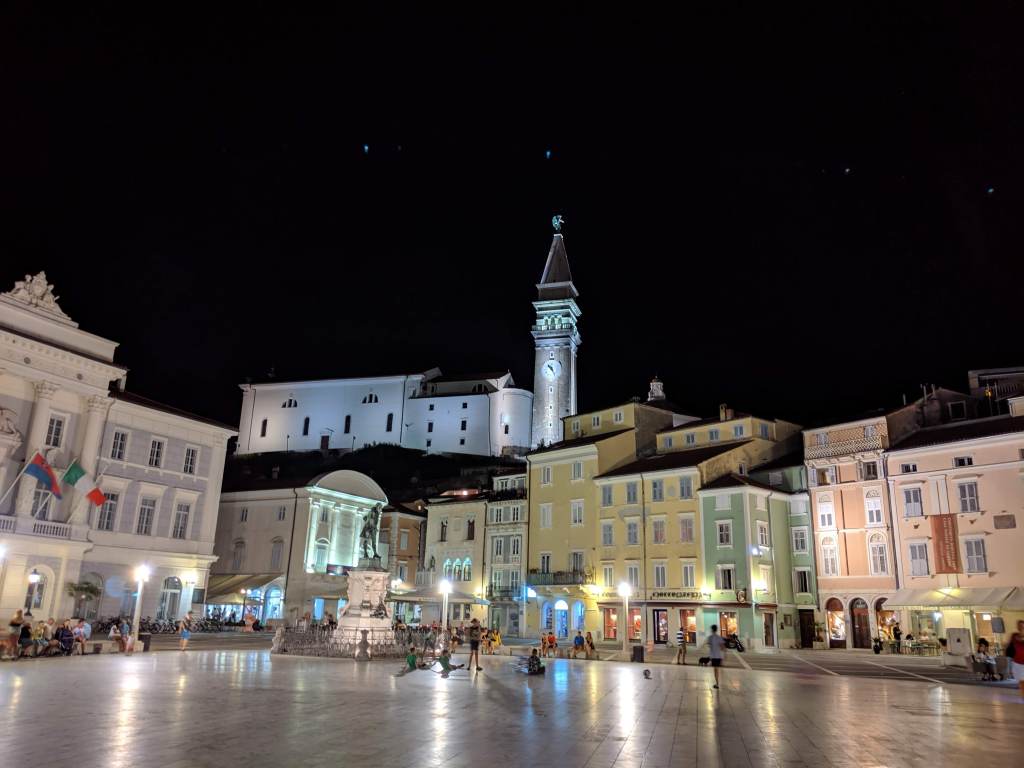
Still, this didn’t in any way put a damper on the allure of what lay before us as we walked along the waterfront into Piran. We’d only seen the tip of the iceberg and we were already won over. The bobbing boats moored at the wharf, the midday sun warming the rows of pastel houses and the backdrop of medieval and gothic architecture all add to the romance of the city. After dropping our luggage off, we got our bearings in the main square. Tartini Square used to be the harbour for boats to dock, but in the 19th century it was built up and became the hub of the city, with municipal buildings added and the open area used for markets. Once you see this square, with its marble paving and brightly-coloured buildings, it’s easy to see the Italian influence in Piran.
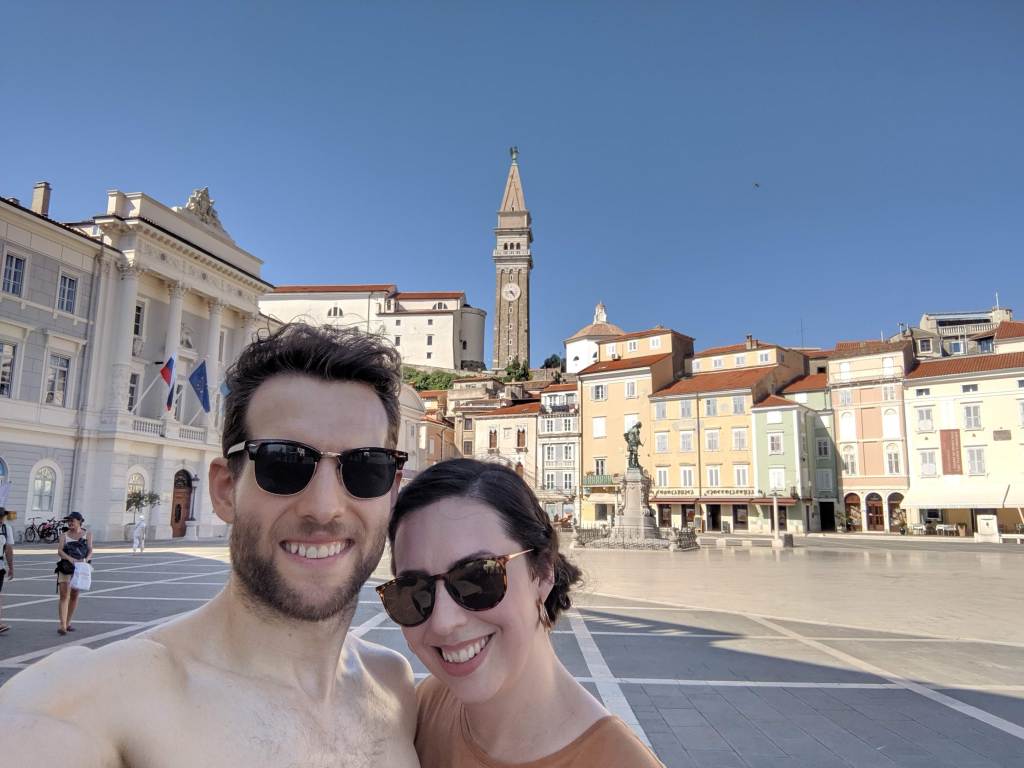
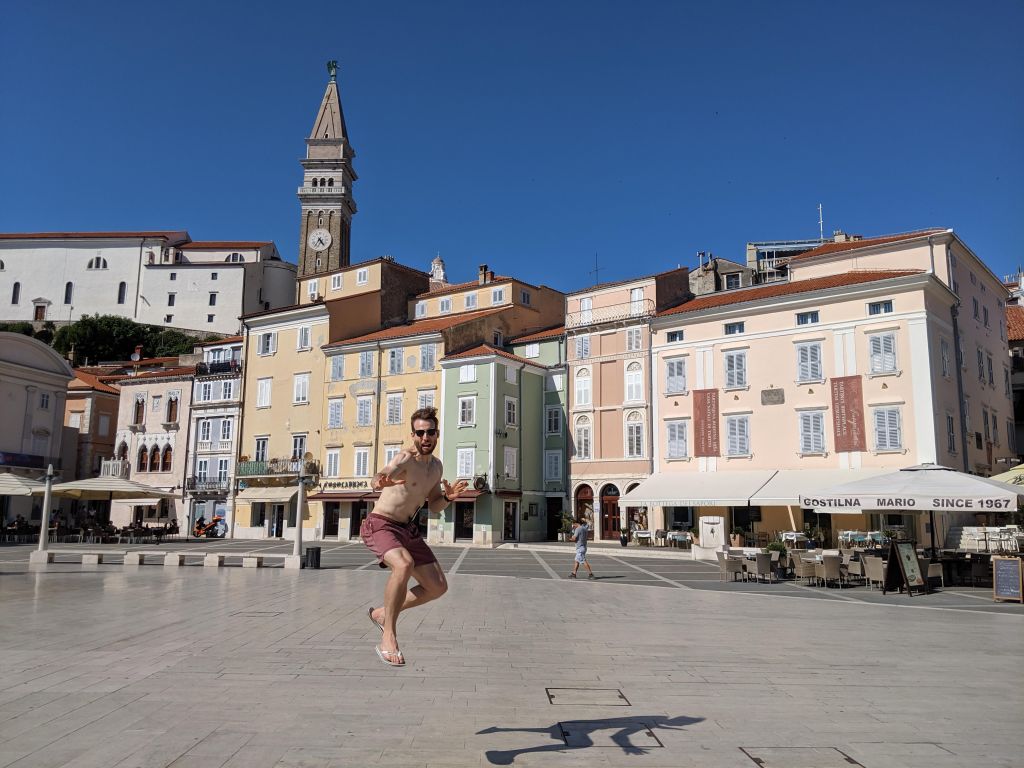
As we wandered around the end of the peninsula, in search of some lunch, restaurant after restaurant offered us a variety of seafood meals. Neither Matt nor myself are big seafood fans, so we opted for pizza and a view of the gulf (we figured, how bad could pizza be in a former Italian city, right?! And if you’re wondering – it WAS good!).
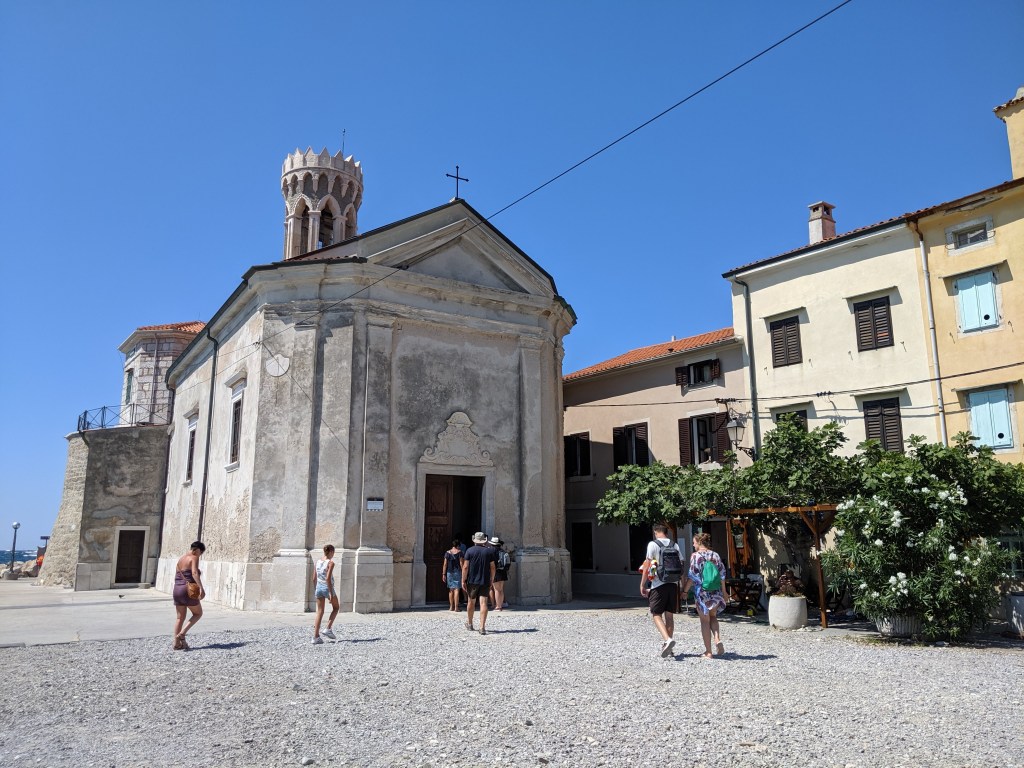
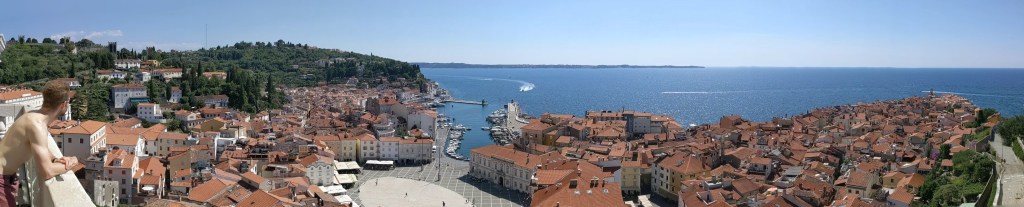
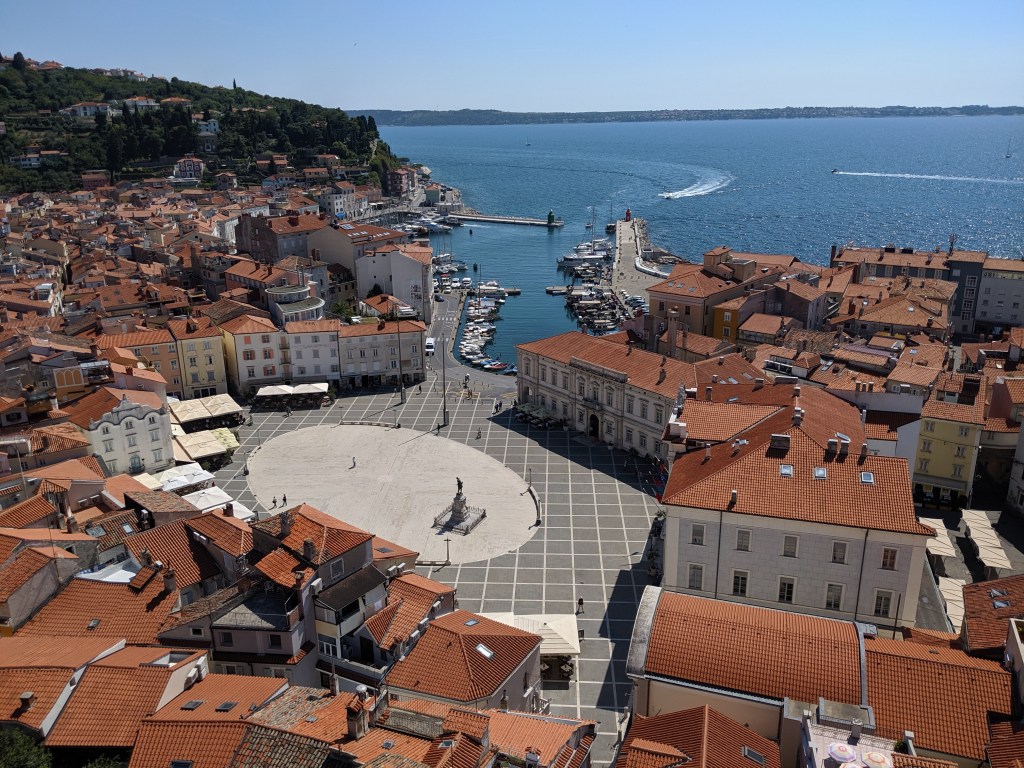
The city can be walked very easily, from one end to the other in about half an hour. There are 2 main locations for viewing the city and both are very worthwhile, but involve walking up a little bit of a hill. For only a few euros, you can gain entry into St. George’s Church Campanile and get yourself fantastic views of the city with its terracotta tiling everywhere, including looking right down on Tartini Square, most of the peninsula, and on a good day, Italy and Croatia!
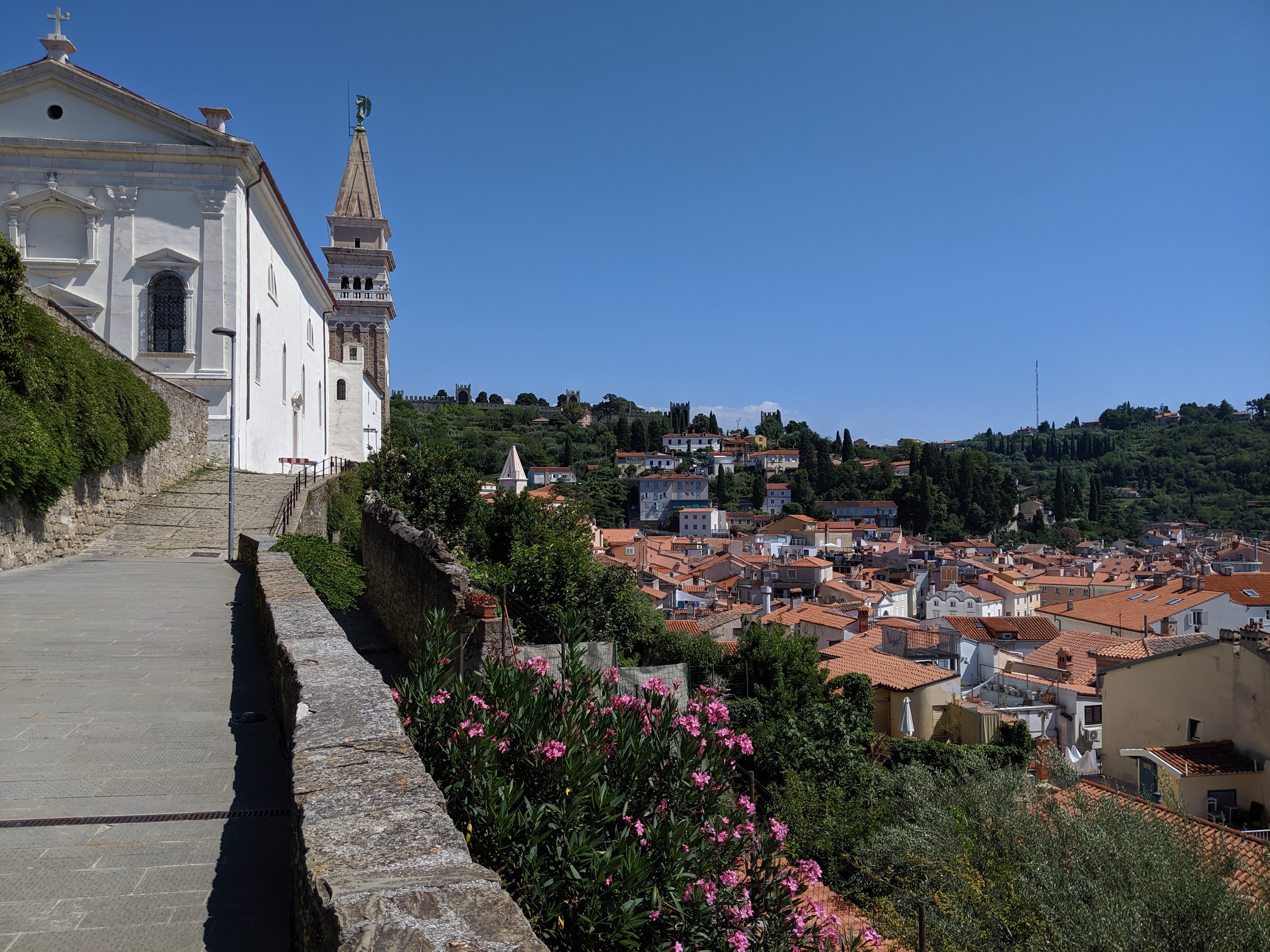
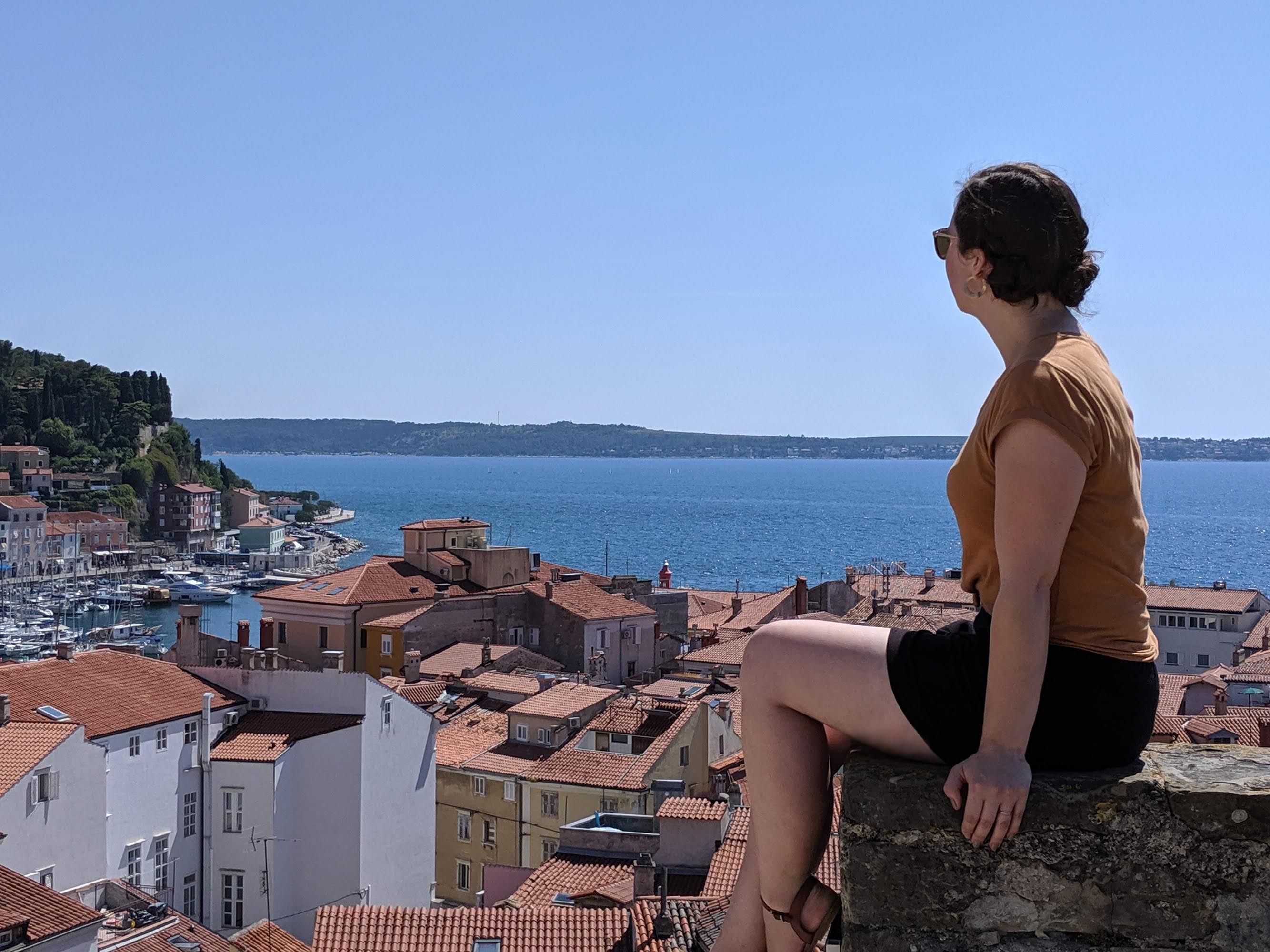
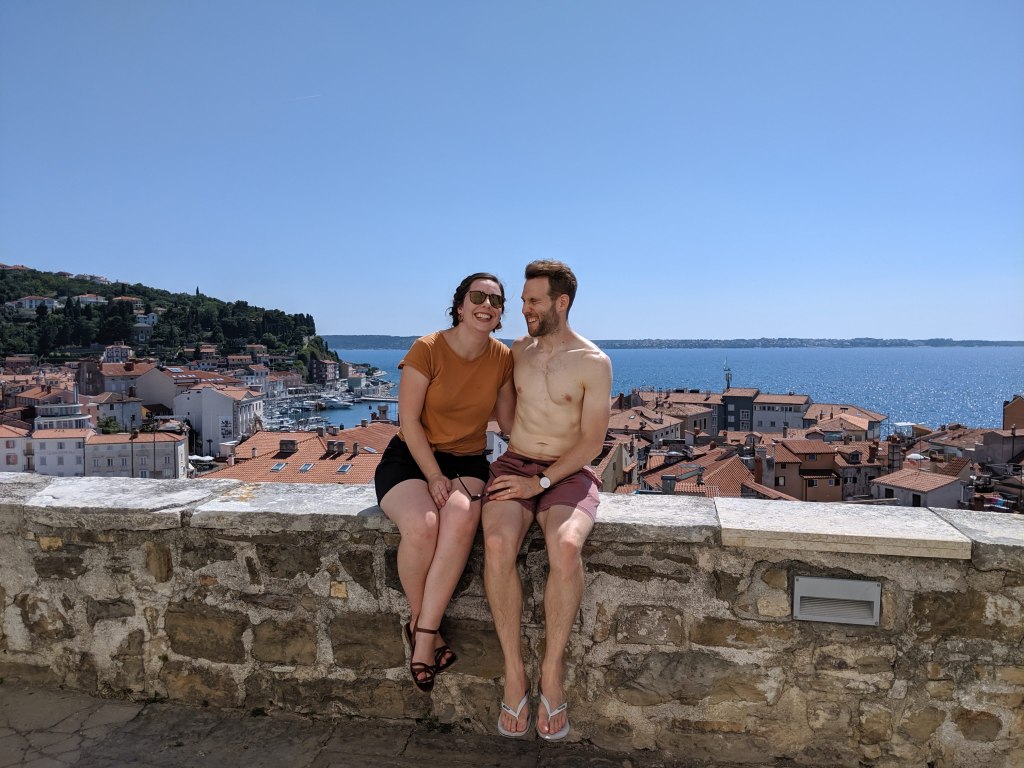
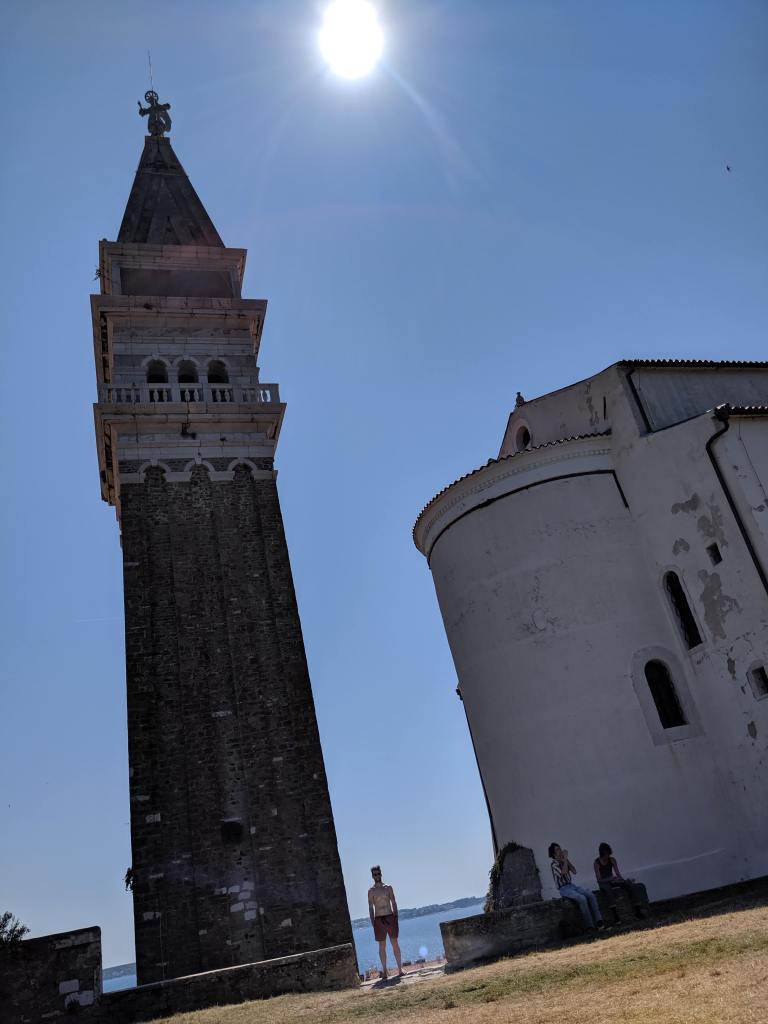
If you walk a bit further, you’ll get to the other prime viewing location – the city wall. Another couple of euro will give you access to walk along a section of the wall. PLEASE be careful though! There are a few warning signs about steep and awkward flights of stairs and ceiling heights – but apparently not enough…. I was busy chuckling to Matt about one particularly odd flight of stairs and didn’t notice that the ceiling got lower as you ascend the stairs. Needless to say, I fought back tears as I nursed a large bruise on the top of my head, only to have the young lady behind me do the exact same thing moments later!
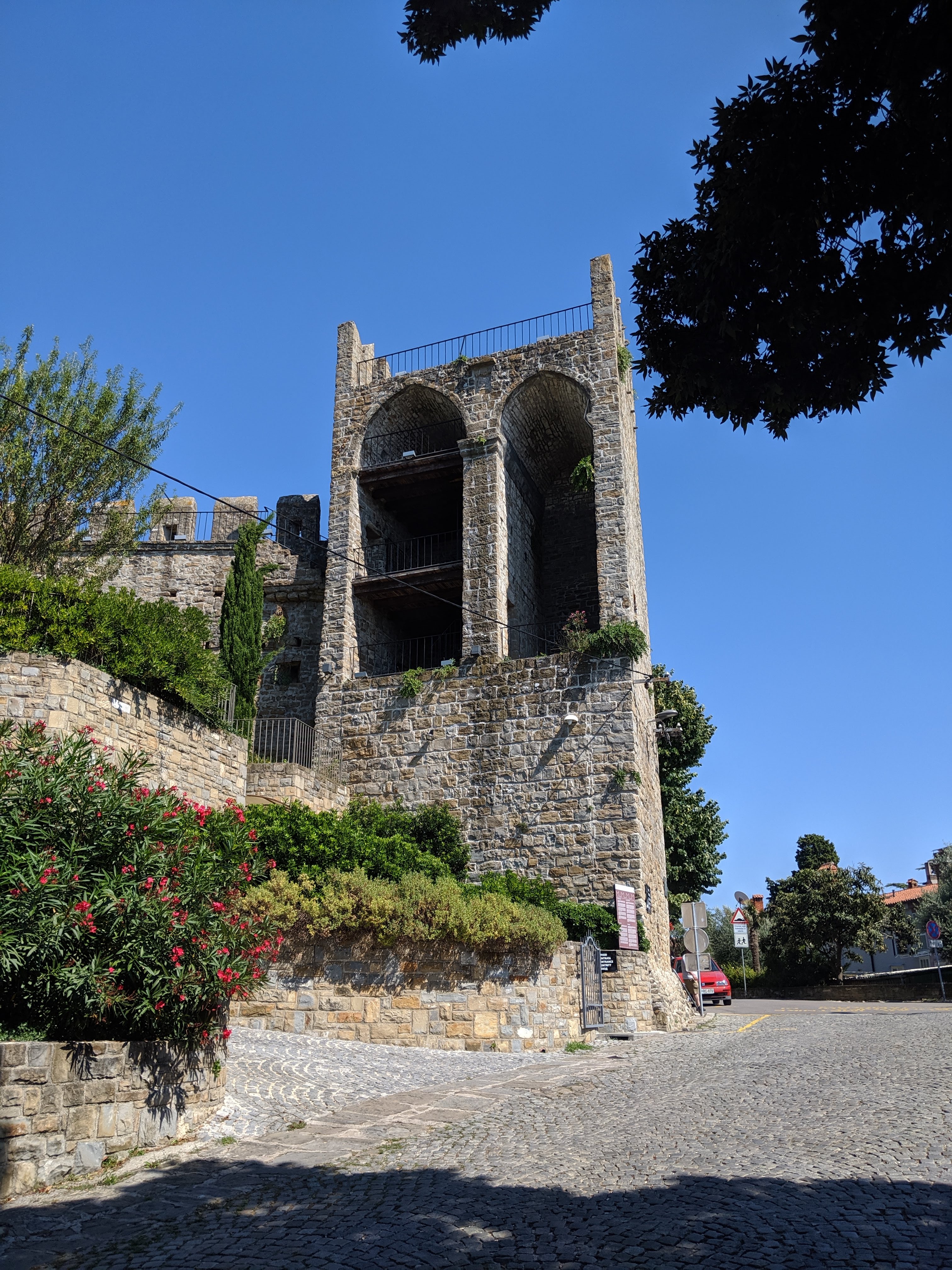
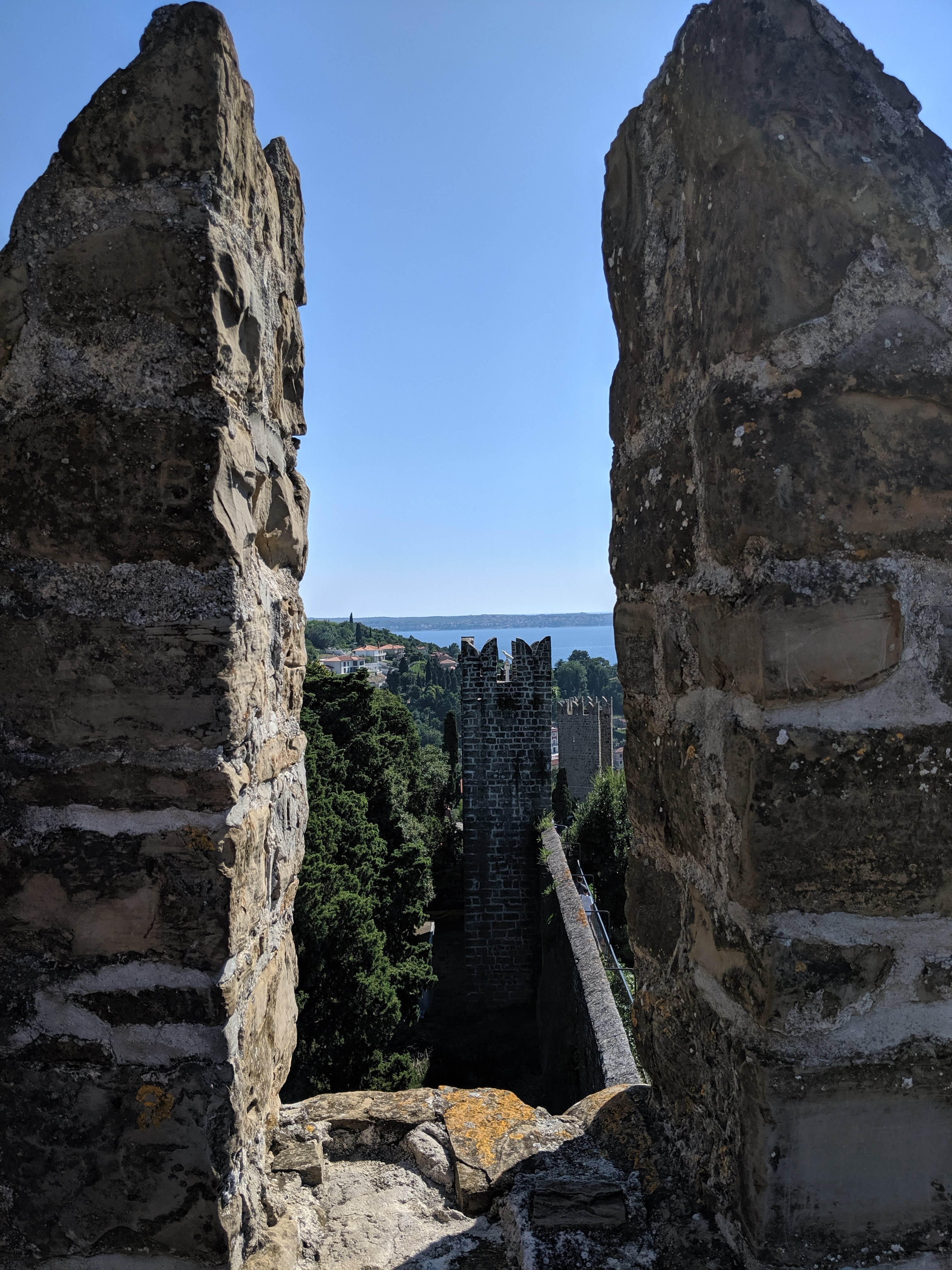
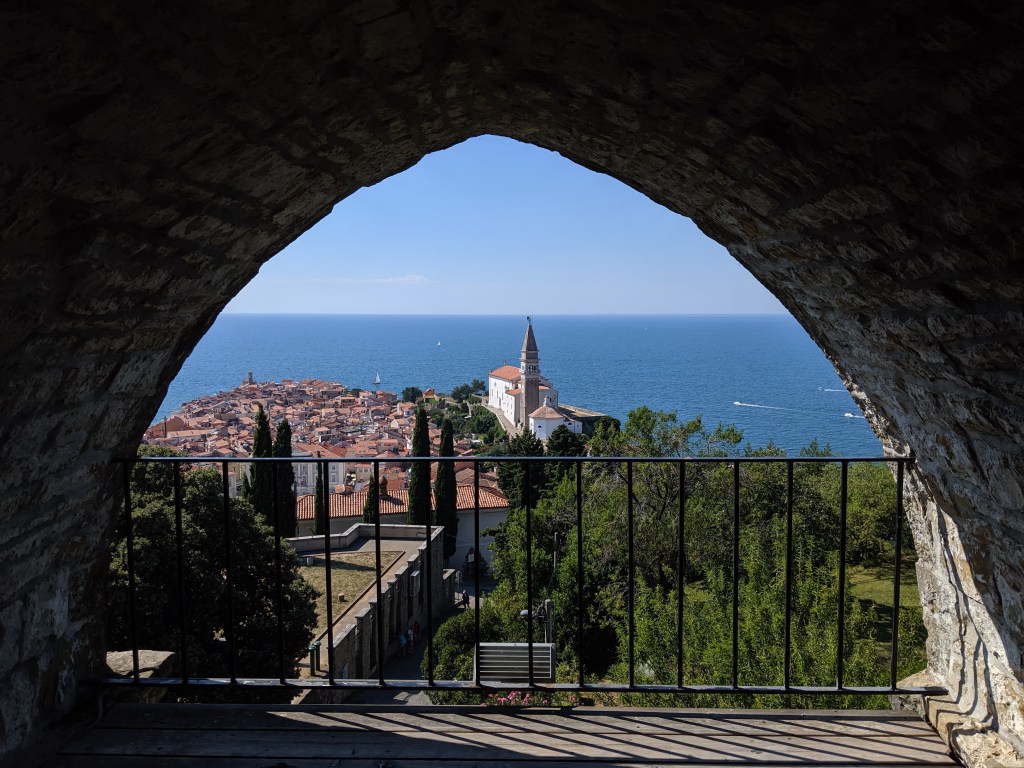
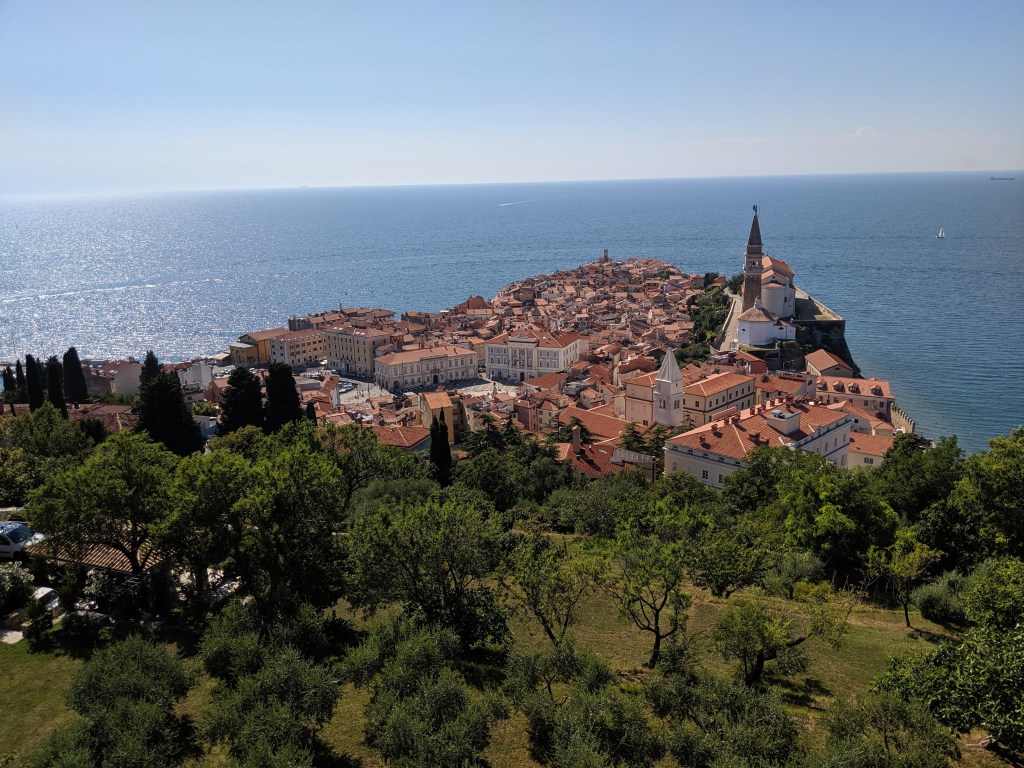
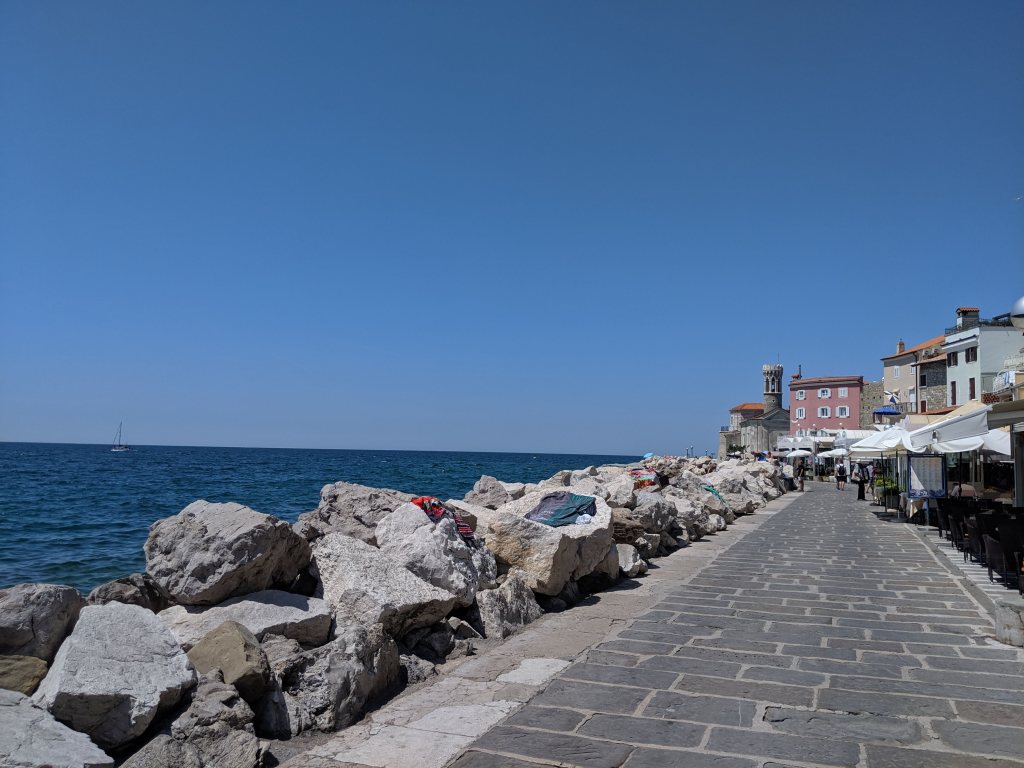
Even though there’s basically no actual sand to speak of along the coast, it doesn’t stop everyone from climbing over the large rocks, littered with drying towels and clothing, to cool off in the glittering, salty blue. There are, however, multiple sections that have been concreted out and had stairs added for easy swimming access. Our sweaty walk up the hill was definitely a good excuse for a swim and the cool evening water was very welcome. The only downside was the amount of seaweed that the tide brought in and wrapped around us as we battled with the waves.
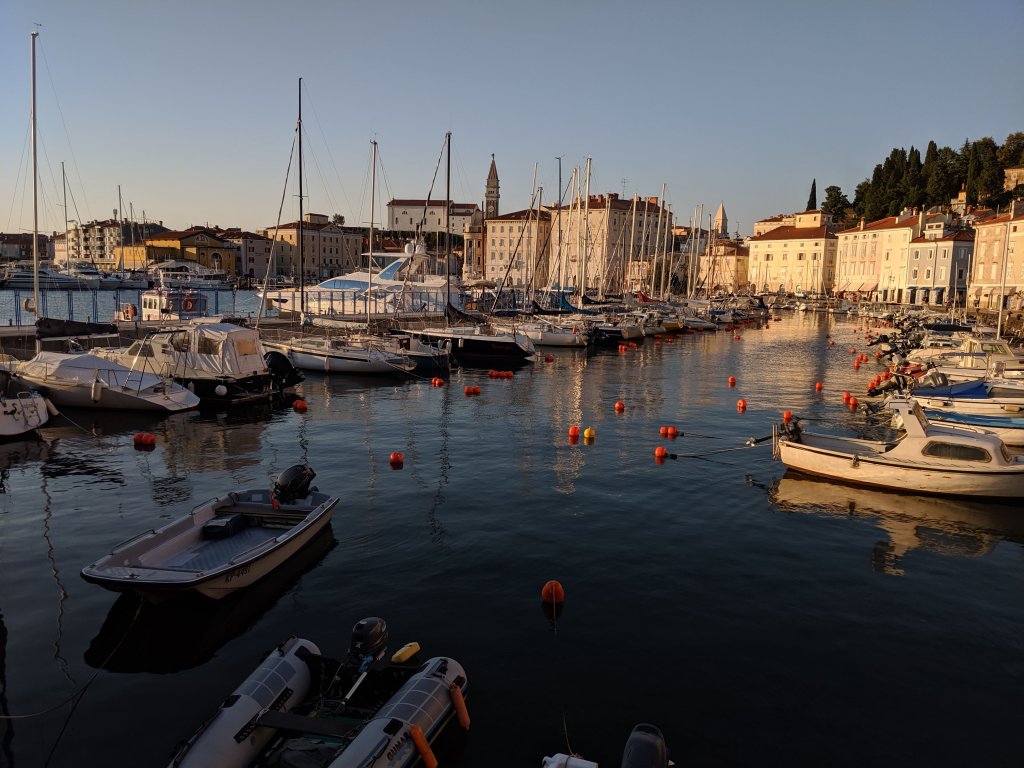
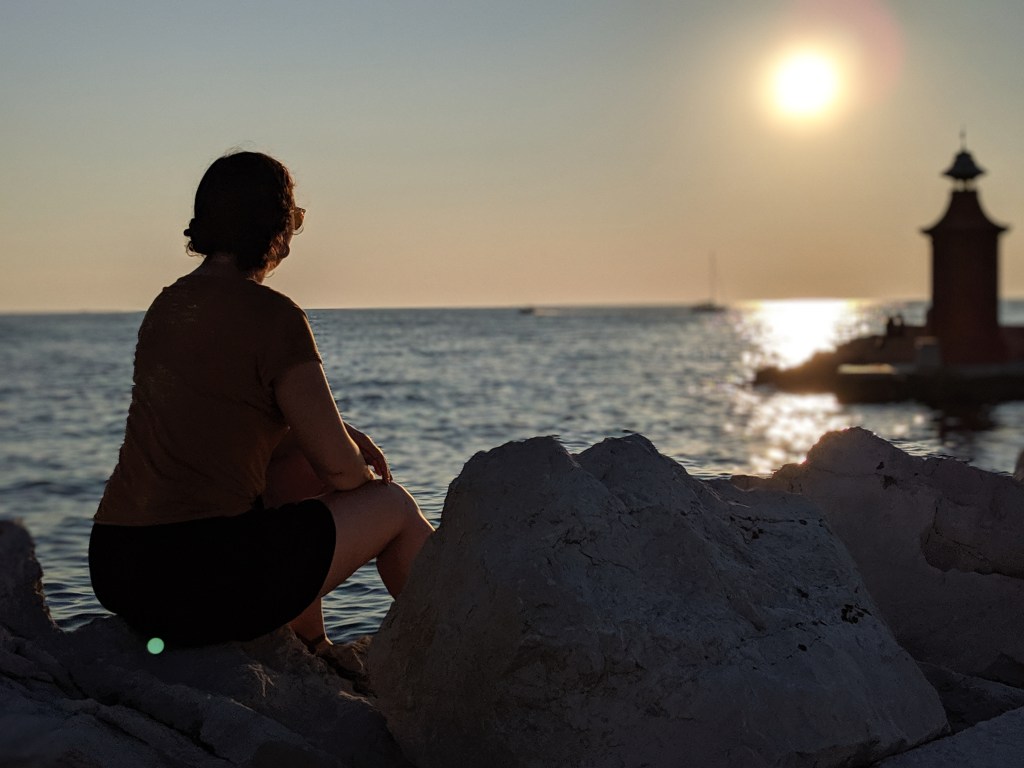
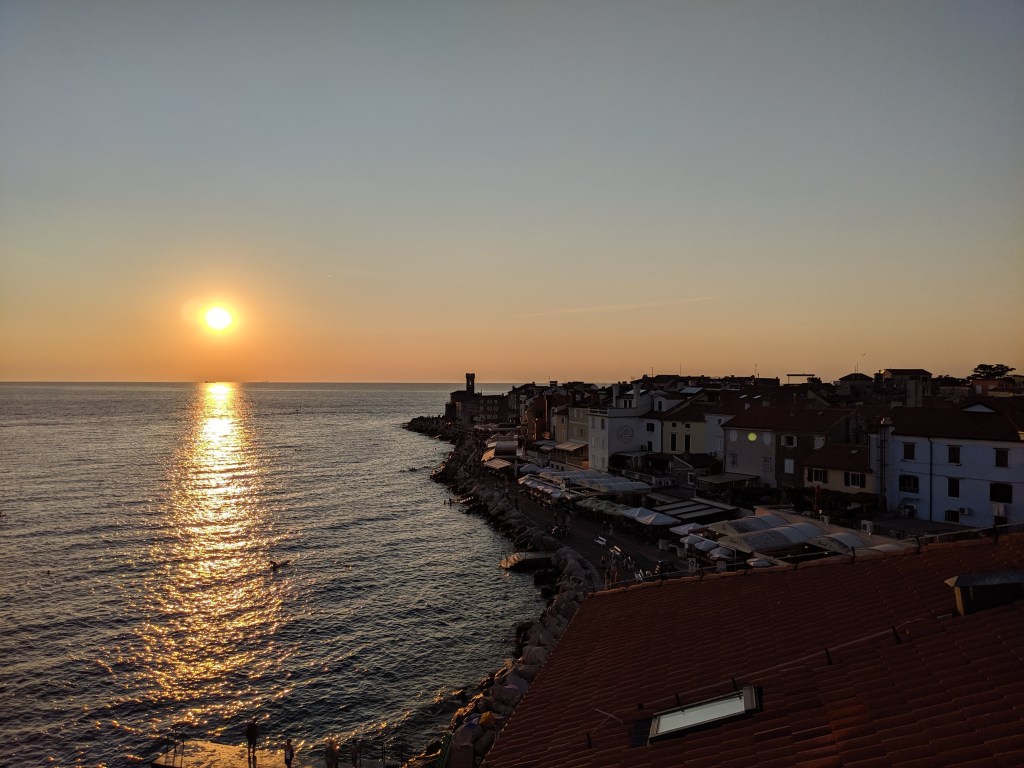
The rest of the afternoon light was spent wandering through cobbled alleyways and watching the golden hour reflections in the harbour. At sunset, we hit up a rooftop bar and sipped cocktails as the sun went down. We still had plenty of time to kill before our midnight bus out, so we thought we’d enjoy a long dinner in the atmospheric Tartini Square. There are many eateries to choose from in the square, but we settled on Gostilna Mario (mostly for location, but I had some excellent pasta!). We found the square particularly came to life in the evening, when it felt like the whole city had come out to have a catch up and a drink with one another. Busker’s music filled the air, kids roller-bladed and kicked a ball around while all the adults watched on with their glass of wine and cigarette in hand.
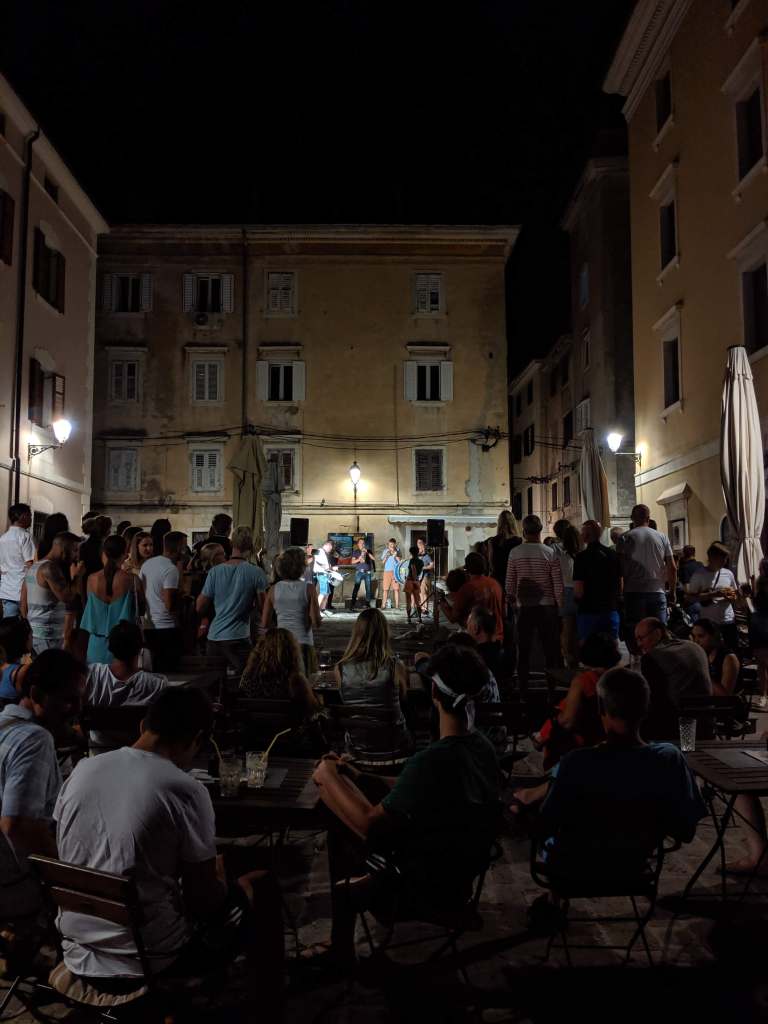
Earlier in the day, we overheard some other tourists enquiring about a jazz performance later that night. As we finished up our dinner we heard some commotion a few streets over, and decided to check that out, realising it was most likely the aforementioned performance. In a dark corner on the docks, between a few buildings, a street light shone down on the musicians, whose jazz echoed throughout the city. Dimly lit faces smiled and let the music sway them.


 The Land Cruisers